Historic Hillside City, El Paso County
Roof Repair in Manitou Springs, CO
Wind-torn shingles, a hail-damaged roof or an old roof in the historic district? Call or send a request to be connected with an independent roofer who serves Manitou Springs.
Historic Hillside City, El Paso County
Wind-torn shingles, a hail-damaged roof or an old roof in the historic district? Call or send a request to be connected with an independent roofer who serves Manitou Springs.
Manitou Springs is a small El Paso County city about five miles from Colorado Springs, with homes climbing the hillsides around its downtown on Manitou Avenue. Dr. William Bell and General William Palmer started it in 1872 as a scenic health resort built around its mineral springs, according to the City of Manitou Springs. Its building permits come through the Pikes Peak Regional Building Department, and its roofs face a mix of history, steep lots, wind and wildfire risk found nowhere else in the area. If your roof needs attention, call or send a short request. Colorado Springs Roof Repair Help is an independent referral service, not a roofing company. Your request goes to an independent third-party roofing contractor who serves the Manitou Springs area and sets its own prices, schedule, warranty and terms. The referral is free, coverage is confirmed by address, and callbacks and on-site availability vary.
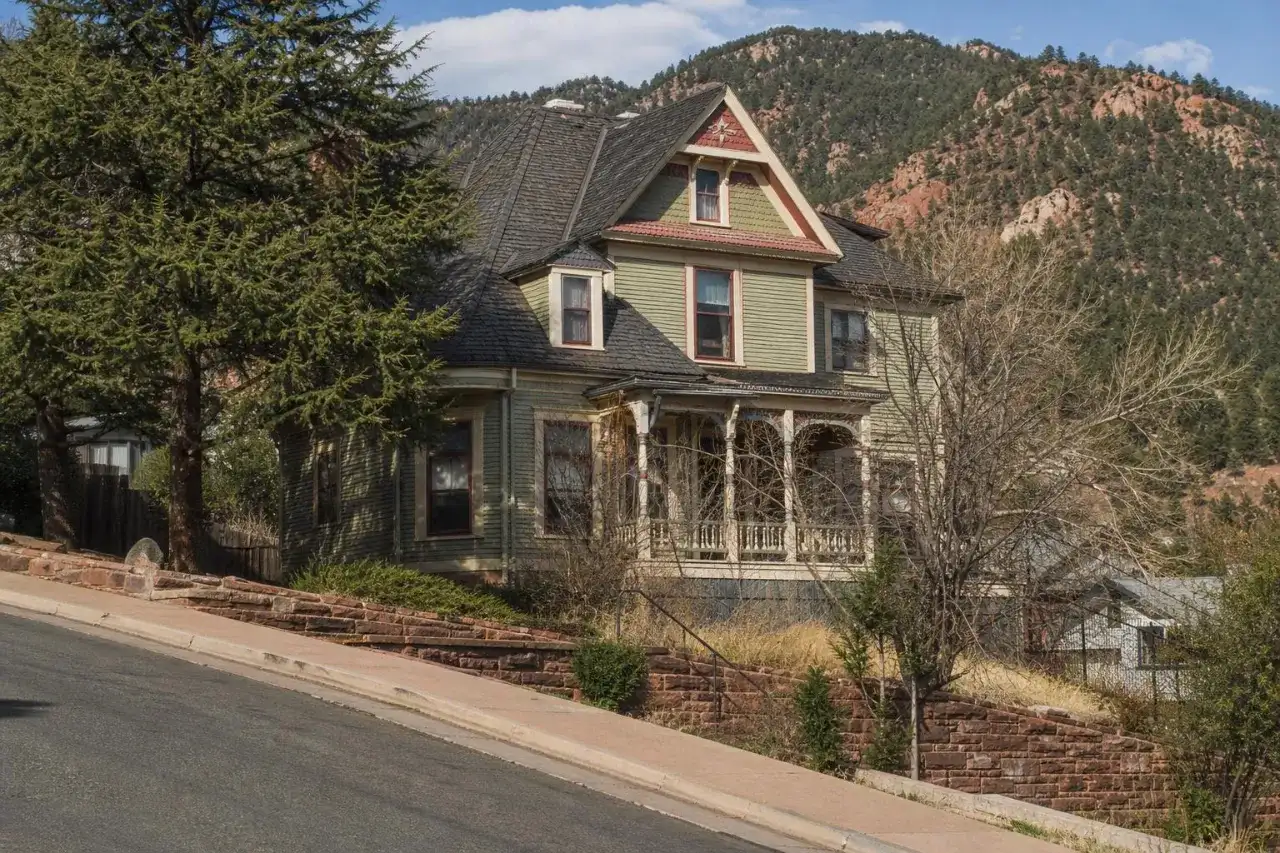
Much of the housing here is old. The National Register nomination for the Manitou Springs Historic District counted about 1,001 buildings, 752 of them contributing, with construction dates running from 1876 to the 1930s. It found that less than 8 percent of homes in the nominated area were built after 1935, that wood was the most common residential material, and that most roofs were shingled. It also describes retaining walls up to about 20 feet tall holding homes on steep slopes. Today the city has about 4,735 residents and 2,625 housing units, with a median owner-occupied home value of $561,200 (Census Reporter). A century-old roof frame, a tight lot and a steep driveway all shape how a repair gets done, so mention them when you send a request.
The city has had a Historic Preservation Commission and a local Historic District since 1980. Its Historic District Design Guidelines (July 2009) divide the district into 16 subdistricts and say a Material Change of Appearance Certification is required for all changes in the district that can be seen from a public right-of-way. Planning staff can approve many simple projects, while others go to the commission. Ordinary maintenance and repair is excluded, but only when its sole purpose is to prevent or correct deterioration, decay or damage and it does not change the property's historic appearance and materials.
In practice, patching a roof with matching material is a different matter from switching materials or changing a roof's shape. The guidelines describe wood shingle roofs on Victorian Shingle homes, red tile on Mission and Spanish Eclectic buildings and flat roofs behind parapets downtown. If your home is in the district and the work would change how the roof looks from the street, check with the city's planning staff before the roofer starts.
The city's Community Wildfire Protection Plan puts Manitou Springs between about 6,300 and 7,200 feet. That matters because the Pikes Peak Regional Building Department requires an ice and water shield on reroofs when the property is above 7,000 feet, and PPRBD's design criteria raise the design ground snow load from 43 to 57 pounds per square foot at the same line. Most of the city sits below it, but the highest hillside lots may not, so ask the roofer which side of 7,000 feet your address is on.
The same wildfire plan says the entire perimeter of the city should be considered wildland-urban interface, with fuels including Gambel oak, mountain mahogany, Douglas fir and ponderosa pine. It notes that the 2012 Waldo Canyon Fire led to the city's evacuation and urges residents to build with fire-resistant materials and keep gutters clean. That fire burned more than 18,000 acres and affected about 380 to 400 properties, according to PPRBD. It never reached Manitou Springs, but the Colorado Resiliency Office says its burn scar sent debris, massive boulders and mud into town in an August 2013 flood. FEMA notes that many areas of the city were affected by that Presidentially declared disaster.
For roofs, a fire-resistant covering is the main defense against embers. The state's Wildfire Resiliency Code calls for Class A roofs in mapped wildfire areas and full compliance when 25 percent or more of a roof is replaced. Ask the roofer to confirm with PPRBD and the city what applies to your address.
Downslope wind can be extreme here. On December 15, 2021, the National Weather Service in Pueblo logged a 101 mph gust 2 miles south-southwest of Manitou Springs and 93 mph 5 miles northeast of town, as a strong jet stream and mountain waves drove extreme winds across the region. NWS Pueblo's winter wind guide says downslope winds of 60 to near 100 mph strike near the foothills, mostly in the cold season. Ridge caps, rakes and loose tabs fail first.
Hail comes too. The August 6, 2018 supercell formed over eastern Park County and crossed Teller County before tracking across El Paso County. NWS storm reports show hail up to 1.25 inches around Manitou Springs and 2 to 2.5 inches just west-southwest of Colorado Springs.
PPRBD lists Manitou Springs as a member jurisdiction, so roof permits go through PPRBD. Repair or replacement over 100 square feet needs a permit, and if you hire a roofer, the roofer must pull it. A single-family reroof permit is $135, and PPRBD's reroof guidelines require old asphalt layers to come off first. An asphalt reroof gets one final inspection, while tile needs a mid-roof and a final. Historic district approval from the city is a separate step.
Requests from Manitou Springs often involve wind-damaged shingles and ridge caps, hail inspections, leaks at chimneys and older flashing, repairs on historic homes that need matching materials, and reroofs on steep hillside lots.
No charge to be connected with an independent roofer who serves Manitou Springs.
Ask whether the work changes how the roof looks from the street before materials are ordered.
Ask about a Class A covering and how ridge caps and rakes will be fastened for downslope wind.
Possibly. The city's Historic District Design Guidelines require a Material Change of Appearance Certification for changes visible from a public right-of-way. Ordinary repair that fixes damage without changing the historic appearance and materials is excluded. Switching materials or changing the roof's shape likely needs review, so check with the city's planning staff before work starts. PPRBD permits are a separate step.
It depends on your lot. PPRBD requires an ice and water shield on reroofs when the property sits above 7,000 feet. The city's wildfire protection plan puts Manitou Springs between about 6,300 and 7,200 feet, so most homes fall below the line and some hillside homes may be above it. Ask the roofer which side your address is on.
Manitou Springs is a member jurisdiction of the Pikes Peak Regional Building Department, so roof permits go through PPRBD. Roof work over 100 square feet needs a permit, and a roofer you hire must pull it. Historic district approval from the city is a separate step.
Yes, where the contractor's coverage reaches. Coverage is confirmed by street address, and callbacks and on-site availability vary.
Manitou Springs homeowners: call or send a request to be connected with an independent roofer.
Free — no obligations